
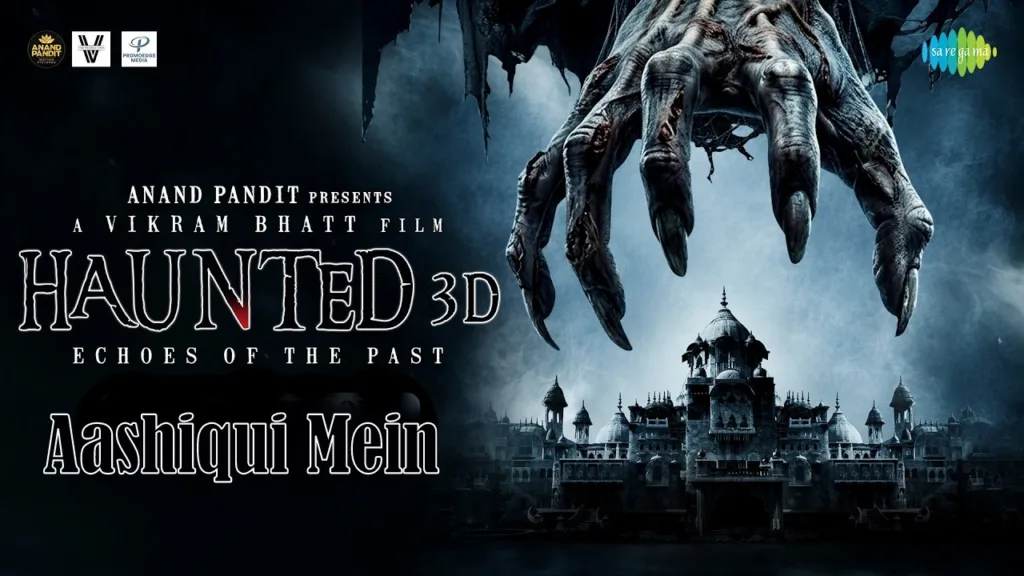
Aashiqui Mein Lyrics : “Aashiqui Mein” is a gripping, highly atmospheric track from the haunting soundtrack of the horror-thriller Haunted 3D: Echoes Of The Past. Specifically crafted to represent the dark, intense, and deeply consuming layers of love, this track delves into the fragile boundary where romance meets overwhelming obsession. It serves as a striking sonic element that perfectly mirrors the film’s suspenseful and eerie narrative.
The song stands as an exceptional personal showcase for the multi-talented artist Prateek Walia, who pulls triple duty as the lead singer, sole composer, and co-lyricist. His vocal delivery transitions effortlessly from tender vulnerability to an intense, soaring crescendo, capturing the exact desperation of a heart completely lost in love (Aashiqui Mein). The complex, poetic verses are co-written by Prateek Walia and lyricist Shweta Bothra, weaving a haunting lyrical tale of passion, destiny, and the ghosts of unforgettable memories.
For any lyrics website, “Aashiqui Mein” is a standout addition to modern Hindi romantic and cinematic playlists. Its high-fidelity production, lingering melodies, and dark emotional tone make it an instant favorite for listeners who appreciate music with a deep, dramatic edge.
Aashiqui Mein Lyrics
Sun raha hoon mein
Teri saari hasratein…
Chhoo rahi mujhe
Narm hothon ki khwahishein…
Aa bujha dein sabhi chaand taare
Mil ke baahon mein dil ko jala lein
Khal’ti mujhko badi hai ye doori
Mere Maula ise tu mita de… haye…
Aashiqui mein hi do dil ye doobe
Aashiqui mein bichhad ye bhi jaya
Kya hi chahta hai humse Khuda ye
Jo na milta hai usko hi chaahein
Aashiqui mein hi do dil ye doobe
Aashiqui mein bichhad ye bhi jaya
Kya hi chahta hai humse Khuda ye
Jo na milta hai usko hi chaahein
Dekh saath tera na mila toh
Mera jeena yahan be-wajah hai…
Ae Khuda teri duniya tu rakh le
Wo nahi toh yahan mera kya hai…
Meri saanso par haq hai tera…
Tum se dastaan shuru…
Tum pe fana… haa…
Aashiqui mein hi do dil ye doobe
Aashiqui mein bichhad ye bhi jaya
Kya hi chahta hai humse Khuda ye
Jo na milta hai usko hi chaahein
Aashiqui mein hi do dil ye doobe
Aashiqui mein bichhad ye bhi jaya
Kya hi chahta hai humse Khuda ye
Jo na milta hai usko hi chaahein
सुन रहा हूँ में
तेरी सारी हसरतें…
छू रही मुझे
नर्म होठों की ख्वाहिशें…
आ बुझा दें सभी चाँद तारे
मिल के बाहों में दिल को जला लें
खलती मुझको बड़ी है ये दूरी
मेरे मौला इसे तू मिटा दे… हाय…
आशिकी में ही दो दिल ये डूबे
आशिकी में बिछड़ ये भी जाया
क्या ही चाहता है हमसे खुदा ये
जो ना मिलता है उसको ही चाहें
आशिकी में ही दो दिल ये डूबे
आशिकी में बिछड़ ये भी जाया
क्या ही चाहता है हमसे खुदा ये
जो ना मिलता है उसको ही चाहें
देख साथ तेरा ना मिला तो
मेरा जीना यहाँ बे-वजह है…
ऐ खुदा तेरी दुनिया तू रख ले
वो नहीं तो यहाँ मेरा क्या है…
मेरी सांसो पर हक है तेरा…
तुम से दास्ताँ शुरू…
तुम पे फना… हा…
आशिकी में ही दो दिल ये डूबे
आशिकी में बिछड़ ये भी जाया
क्या ही चाहता है हमसे खुदा ये
जो ना मिलता है उसको ही चाहें
आशिकी में ही दो दिल ये डूबे
आशिकी में बिछड़ ये भी जाया
क्या ही चाहता है हमसे खुदा ये
जो ना मिलता है उसको ही चाहें
Noticed an error in the lyrics? Please report it with the correction! ⚠️ Report Error or Submit Corrected Lyrics
Aashiqui Mein Official Video
Aashiqui Mein Song Credits :
| Title : | Aashiqui Mein |
| Singer: | Prateek Walia |
| Album: | Haunted 3D: Echoes Of The Past |
| Lyrics By: | Prateek Walia, Shweta Bothra |
| Music By: | Prateek Walia |
| Label: | Saregama Music |
| Director: | Vikram Bhatt |
| Released on : | May 20, 2026 |
Aashiqui Mein Lyrics Meaning :
The song “Aashiqui Mein” from Haunted 3D: Echoes Of The Past, written, composed, and sung by Prateek Walia (with co-lyricist Shweta Bothra), is an intense, gothic-tinted romantic track. It delves into the dark, consuming nature of a love that borders on obsession, destiny, and spiritual helplessness.
Here is a section-by-section breakdown of the profound emotional and poetic meaning behind the lyrics:
1. Intimate Connection and Silent Desires
Sun raha hoon mein, teri saari hasratein… Chhoo rahi mujhe, narm hothon ki khwahishein…
Meaning: The song begins in an intensely intimate space. The protagonist doesn’t just hear words; they are completely tuned into the silent desires, unspoken thoughts, and unfulfilled longings (hasratein) of their beloved. The connection is so deeply spiritual and physical that even the softest breath or unexpressed wish (khwahishein) feels like a tangible touch, bridging the gap between their souls.
2. Desperation to Erase the Distance
Aa bujha dein sabhi chaand taare, mil ke baahon mein dil ko jala lein Khal’ti mujhko badi hai ye doori, mere Maula ise tu mita de… haye…
Meaning: Here, the lyrics shift into an overwhelming passion that defies the natural order. “Extinguishing the moon and stars” (bujha dein sabhi chaand taare) symbolizes shutting out the entire outside world and time itself, wanting nothing but total darkness so their love can be the only light.
“Burning the heart in an embrace” (dil ko jala lein) signifies a love so fierce it is willing to consume itself. The physical and emotional distance (doori) feels like an agonizing weight, leading the protagonist to cry out to God (Maula) to completely erase this separation, even if it requires a cosmic intervention.
3. The Tragic Paradox of Destiny (The Chorus)
Aashiqui mein hi do dil ye doobe, aashiqui mein bichhad ye bhi jaaya Kya hi chahta hai humse Khuda ye, jo na milta hai usko hi chaahein
Meaning: This chorus introduces the central, haunting paradox of the film’s narrative. Love (Aashiqui) is a force that completely submerges two hearts, yet it carries a tragic curse—the inevitability of separation (bichhad jaana).
The lover questions the irony of divine play (Khuda): Why does the Almighty design human hearts to desperately crave, ache, and long for the exact person who is forbidden or unattainable? It highlights the human tragedy of being destined to love someone whom the universe refuses to let you have.
4. A Rejection of a World Without Love
Dekh saath tera na mila toh, mera jeena yahan be-wajah hai… Ae Khuda teri duniya tu rakh le, wo nahi toh yahan mera kya hai…
Meaning: This verse captures ultimate romantic nihilism and obsession. The protagonist declares that a life without their partner’s presence is utterly meaningless and purposeless (be-wajah).
In a bold, defiant stance, the lover tells God to “keep His universe” (teri duniya tu rakh le). They argue that a world, no matter how grand, holds absolutely zero value if the beloved isn’t in it. It represents a total surrender where the partner has completely replaced the world and God himself.
5. Eternal Ownership and Ultimate Sacrifice
Meri saanso par haq hai tera… Tum se dastaan shuru, tum pe fana… haa…
Meaning: The song reaches its emotional and thematic peak in the bridge. The lover yields absolute ownership of their life force, stating that even their breaths (saanso) belong entirely to the beloved.
The line “Tum se dastaan shuru, tum pe fana” encapsulates the entire timeline of their existence: their life’s story (dastaan) only truly began when they met, and they are fully prepared to meet their ultimate destruction or demise (fana) in this very love. It is a powerful vow of living and dying entirely for one person.